

宁诺执行校长出席2025世界大学校长论坛,深度解析AI对科研与高教的影响
Please scroll down for the English version - UNNC Provost attended 2025 World University Presidents Forum, explored AI's impact on research and higher education.
人工智能将如何重塑大学?
高等教育的未来会走向何方?
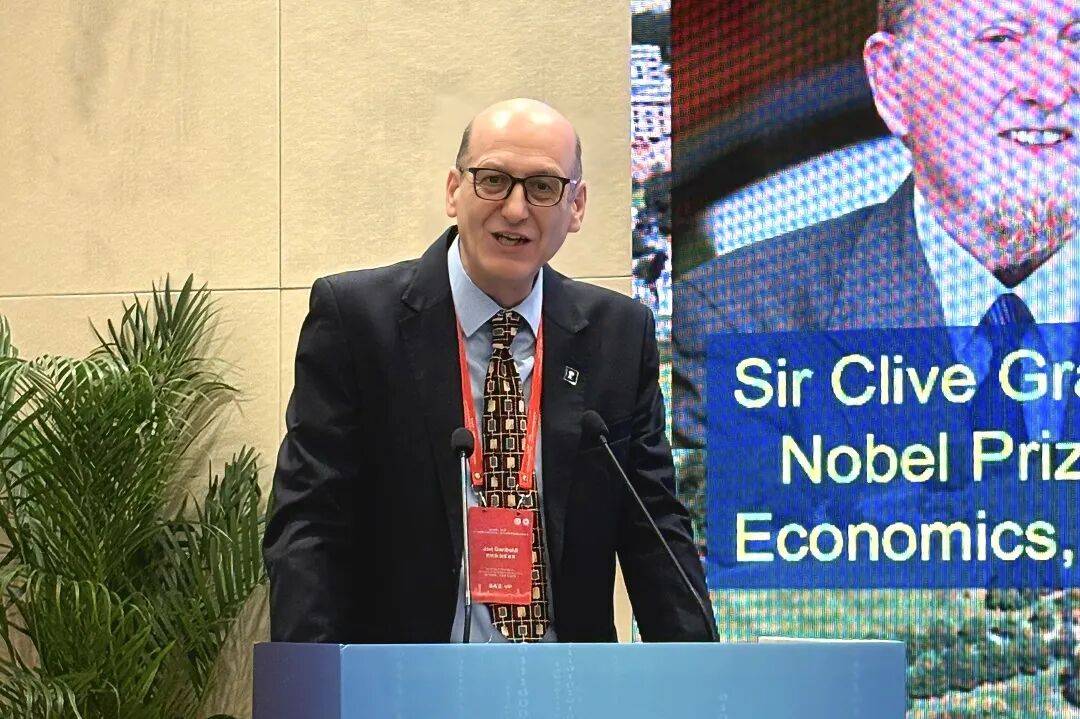
11月8日,2025世界大学校长论坛在杭州国际博览中心举办。宁波诺丁汉大学执行校长乔纳森·加里波第教授(Jon Garibaldi)出席论坛,并在“人工智能与科研范式的转型”分论坛作主题报告。
本届论坛聚焦“人工智能与高等教育的未来”这一前沿主题,汇聚来自五大洲40余个国家和地区的70余位境外大学校长、20 余位国际组织及重要教育机构负责人、200余位中国知名高校负责人及10余位两院院士,共同探讨AI对教学模式、科研范式、人才培养体系的推动作用,为全球合作视野下我国高等教育高质量发展寻找更优路径,也为世界高等教育可持续发展提供融通中外的智慧和答案。
加里波第教授以《人工智能范式转移:对科学研究的启示》为题,结合其30余年AI研究经验,分享了独到见解。他指出,当前公众常将ChatGPT、DeepSeek等大语言模型等同于“通用人工智能”,实则它们仅是AI的一个分支,本质是基于海量数据的统计预测算法,结果未必可靠,需理性看待与审慎使用。

加里波第教授
“AI将以‘嵌入式方法论工具’的角色重塑科研实践,如同计算机革命一样,AI将在数据处理、论文撰写、合作沟通等方面提升效率,但不会取代人类研究者,反而会让善用AI的研究者更具竞争力,各学科亟需探索AI在本领域的适用场景与应用能力。”
针对AI的“双面性”,他坦言存在代笔、伪造数据等滥用风险,IEEE(国际电气与电子工程师协会)等出版机构已出台规范,要求明确标注AI使用情况。但AI的正向价值更值得关注:它能协助科研人员打磨结构严谨、表达清晰的高质量论文,辅助评审者核查论文可读性与研究可重复性,还能优化实验设计与统计分析,未来必将为科学研究带来深远且积极的推动。
值得一提的是,宁诺今年也积极拥抱AI技术革新,推出“UNNC AI”,整合微软官方Azure OpenAI GPT-4.1、o4-mini及 DeepSeek R1三大模型企业版,并搭载先进的企业级AI安全保障体系,更同步出台《学生人工智能使用政策》,为技术应用划定规范边界。
如今,这一前沿AI工具已融入校园教学、科研与行政工作各环节:在教学中辅助师生拓展知识维度,在科研中为数据处理、实验设计提供智能支持,在日常工作中助力提升行政服务与协作效率。未来,宁诺将持续推动技术创新与教育深度融合,以实际行动引领智能时代的高等教育变革。
UNNC Provost attended 2025 World University Presidents Forum, explored AI's impact on research and higher education
How will AI reshape our universities, and what does the future hold for higher education? On 8 November, the 2025 World University Presidents Forum was held in Hangzhou. Professor Jon Garibaldi, Provost of the University of Nottingham Ningbo China (UNNC), attended the forum and delivered a keynote speech at the sub-forum themed "AI and Scientific Research Paradigm Shift".
Centred on the forward-looking theme "AI and the Future of Higher Education", this year’s forum brought together more than 70 university presidents from over 40 countries and regions across five continents, more than 20 leaders from international organisations and key educational institutions, over 200 leaders from renowned Chinese universities, and more than 10 academicians from the Chinese Academy of Sciences and Chinese Academy of Engineering. Participants explored AI’s pivotal role in revolutionising teaching models, transforming research paradigms, and enhancing talent development systems. The forum aimed to identify effective pathways for the high-quality development of Chinese higher education from a global cooperation perspective, while also contributing joint Sino-foreign wisdom and solutions to the sustainable development of global higher education.
In his keynote speech titled “The AI Paradigm Shift: Implications for Scientific Research”, Professor Garibaldi shared insights drawn from over 30 years of experience in AI research. He noted that the public today often equates Large Language Models (LLMs), such as ChatGPT and DeepSeek, with "general AI". In reality, he explained, these models are a specific subset of AI—essentially statistical prediction algorithms whose impressive performance relies on training with massive datasets. Their outputs are not always reliable, and therefore must be used with rational judgement and caution.
Professor Garibaldi emphasised that AI is transforming research practices by becoming an "embedded methodological tool". Just as the computer revolution reshaped research methods, AI will improve efficiency in data analysis, academic writing, and collaborative communication. However, he stressed that AI will not replace human researchers; rather, researchers who use AI effectively will replace those who do not. He called for urgent exploration within various disciplines to identify suitable AI applications and capabilities.
Addressing the dual nature of AI, Professor Garibaldi acknowledged the risks of misuse, such as AI-assisted ghostwriting and data fabrication. In response, publishing organisations like the IEEE (Institute of Electrical and Electronics Engineers) have introduced guidelines that restrict the use of LLMs in academic writing and/or require explicit disclosure of their use. Nonetheless, he emphasised that AI’s positive potential deserves greater recognition: it can help researchers produce well-structured, well-presented, and clearly written high-quality papers. Moreover, AI can support the paper review process by improving readability, checking the reproducibility of research findings, and assisting in designing sound experiments and the applying statistical analysis to ensure that authors’ claims are supported by evidence.
Notably, UNNC has embraced AI-driven innovation this year through the launch of "UNNC AI". This platform integrates enterprise editions of three major models—Microsoft’s Azure OpenAI GPT-4.1, o4-mini, and DeepSeek R1—along with an advanced enterprise-level AI security system. It provides intelligent support for students’ daily learning and offers a reliable platform for staff and students to conduct AI-related research and practice. UNNC remains committed to promoting the integration of technological innovation and education, leading the transformation of higher education in the age of intelligence.
图文来源:Lucrecia Zhou,Kevin Lin
电子编辑:Suri An
精彩内容
再创记录!宁诺每7位科研教师就有1位跻身 “全球前2%顶尖科学家”
宁波诺丁汉大学正式获批推免资格,系首批拥有此资格的中外合作高校!
推动“一带一路”高质量发展——宁诺牵头的这份联合国报告重磅发布!
宁波诺丁汉大学
2025高考招生宣传片
点击边框调出视频工具条
<<< 点击即可播放 >>>
<< 阅读栏目精彩内容,左右更多特色专栏 >>
@Copyright 转载或进一步了解宁波诺丁汉大学市场与传媒办公室
commsandmarketing@nottingham.edu.cn